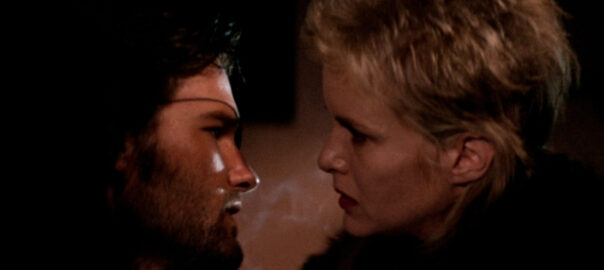
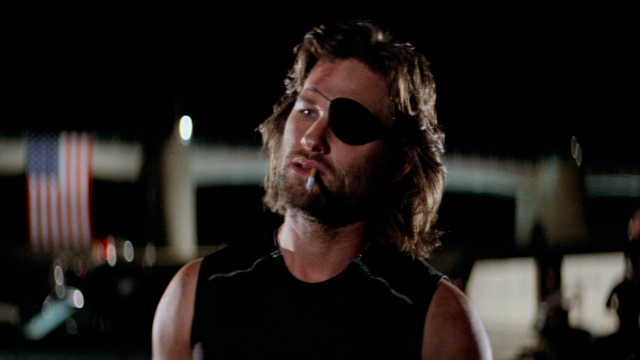
Sure. Kinda cheesy in parts, and Kurt Russell’s lines rather too breathily pronounced, but what a blast to watch this one again tonight! A pretty-much full house was enthralled by John Carpenter’s (dare I say?) masterpiece.
I first screened this at MovieNight on 16th St. in the spring of 2002. I guess the time will be 2050? Not likely, but never say never!
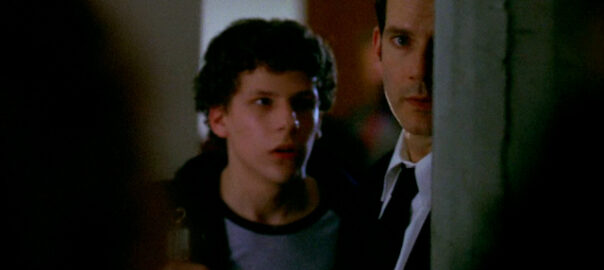
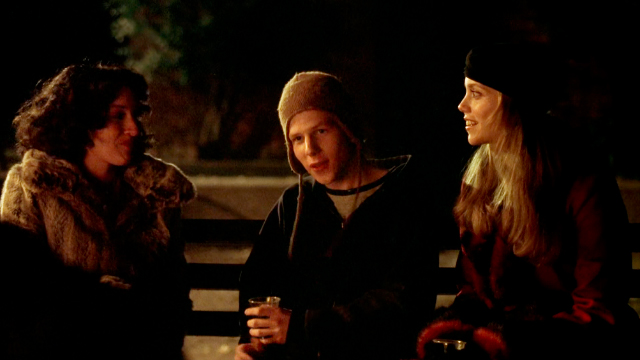
This week I once again eschewed the very modern, to look back fondly at what seems like a very different New York City. Has the city changed that much, or is it me? Maybe both. Whatever the case, Dylan Kidd’s Roger Dodger really hit the spot, with a very snappy script, and great performances all round (fascinating to watch the young Jesse Eisenberg, already shining).
For my part, I was happy to enable a bunch of people forget about the “now” and get lost in the “then” for 106 minutes.
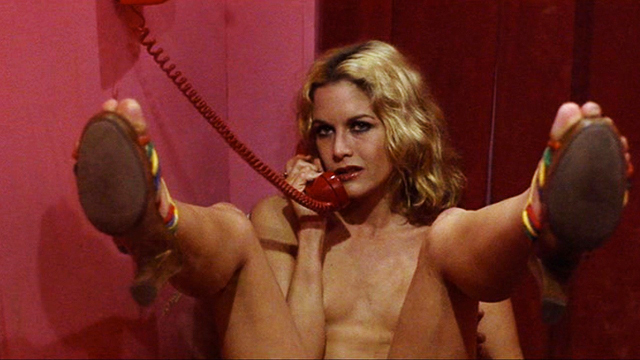
To be honest, I can’t remember whether I ever saw Hardcore back in the day (damn! I was 27 when it came out!), but a recent recommendation prompted me to check it out. What a great movie. The story is gritty, grimy, sexy and exciting enough… there’s plenty of action, but beyond that, Schrader manages to inject a lot of laugh-out-loud moments. “My name is Dick Black.” proclaims the only African American at a casting for a porno movie. Hysterical.
Athina Rachel Tsangari’s Attenberg is a quirky gem that falls easily into the category Greek New Weird – think Dogtooth, as a prime example. Yorgos Lanthimos had directed Dogtooth two years earlier and, perhaps not even suspecting the mark he would make as a auteur in years to come, he appears in a supporting role here. He plays the engineer who (very tenderly) guides Marina (Ariane Labed) in her journey of finally coming of age, sexually. There was definitely some chemistry between them, as three years later they married, and are together to this day.
Having watched Sir David Attenborough’s documentary on apes and monkeys together, Marina and her cancer-ridden father mimic monkey communication in some light-hearted moments in the film. Very touching.
And… this evening Igor returned with herring. Another great night at NewScreen!
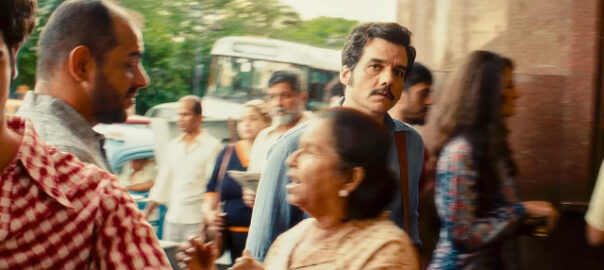
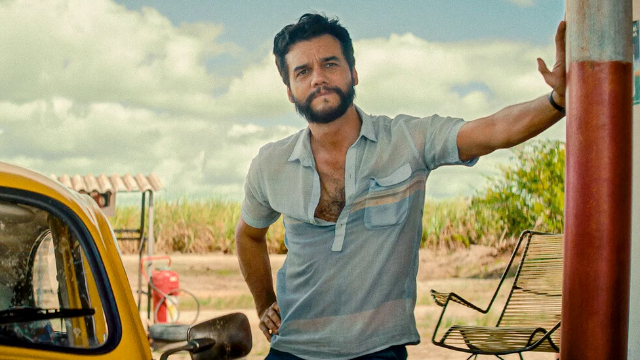
1977 Brazil. Not an easy time to stick to one’s principles and remain alive, but certainly fertile territory for brilliant movie-making. In The Secret Agent, director Kleber Mendonça Filho manages to break up the terror with doses of comedy, sometimes humanist, sometimes absurd, often laugh out loud.
Try as I might, I couldn’t get this almost 3 hour epic started at 8:30, as I had promised. Still, I was only about 15 minutes late. This was, however, 15 minutes too many, and we had a couple of dozers-off. I had to intervene with a quick bit of shushing. All good. Another great night at NewScreen.
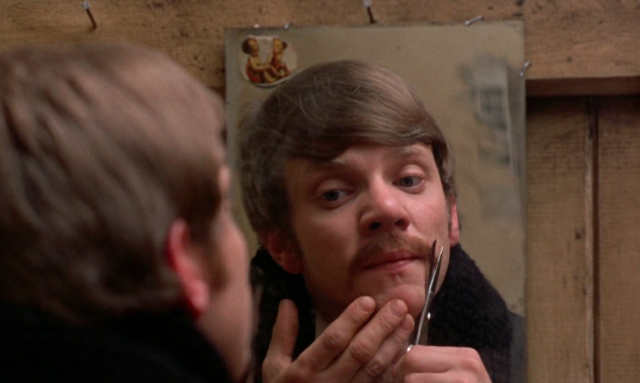
My face is a never-failing source of wonder to me.
Unexpectedly, we had another great turnout tonight. I say “unexpectedly” not because I was worried that folks wouldn’t love this movie, but because only 4 people responded to the invite. That’s the way it goes these days. I get it though, and I’m always happy when the doorbell just keeps ringing (and Tick just keeps barking, excitedly). Many thanks to Sheldon for acting as door-opener while I’m busy shaking up cocktails!
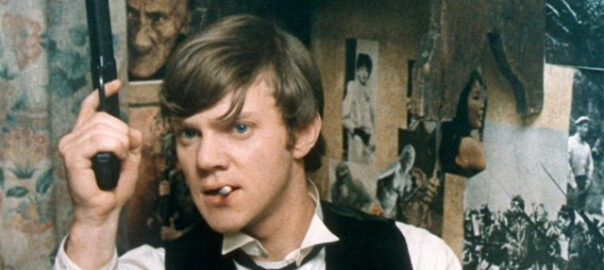
Lindsay Anderson’s quirky 1968 film, If…. marked Malcolm McDowell’s cinematic debut. Before this, he was known in Britain for his role as Crispin Ryder on the long-running ITV soap opera, Crossroads. He went on to garner acclaim in A Clockwork Orange, and O Lucky Man! and he has since appeared in well over 200 movies. As of today’s date, at age 82, McDowell is working on 7 projects, both filming and in pre-production. His latest film, Psycho Killer, will be released next week in theaters. Rock on, Malcolm! You are a never-failing source of wonder.
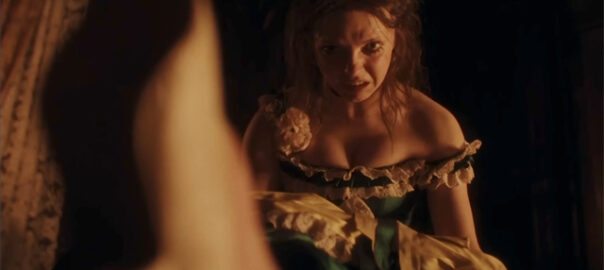
Well now… that was something! For the first half hour, Emilie Blichfeldt’s The Ugly Stepsister reads like a dramatic period piece centered on the struggle for survival of “A widow with saggy tits and two hopeless daughters”. The solution? A makeover of the elder daughter, to captivate and marry the handsome prince.
The makeover introduces us to some body horror that, quite frankly, is difficult to look at, and from that point on, things get pretty pretty gnarly. Still, it’s beautiful film making that will stick in your head long after the credits have rolled. And Blichfeldt’s feminist messaging leaves no question that, although we still have a long way to go, things are better now.
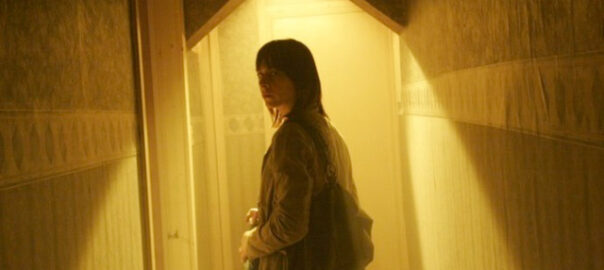
I wasn’t expecting so many people to venture out during this freeze-blast, but venture out they did! They were not disappointed. This was my third screening of Red Road, and it hasn’t lost one bit of its edge. In the 2014 blog post after the second screening, I had this to say:
“Life in Glasgow can be pretty harsh. “I’ll see you, Jimmy!” is something you don’t want to hear being directed at you, since it is usually followed by excruciating pain, typically caused by the impact of the speaker’s forehead across the bridge of your nose. This move is often referred to as a “Glasgow Kiss”. Yet, in Andrea Arnold’s debut feature, Red Road, which packed the house on this lovely, springy first day of May, there is evidence of tenderness as well. The sex scene is, how shall I put it… quite memorable.
We first showed Red Road in 2006, before it was released in this country… had to sit on the floor that night. It’s hard to believe that eight years have passed. Sill here!”
Arnold’s best known films are Fish Tank (2009) and American Honey (2014). Her most recent is Bird (2024), which was well received at NewScreen last year. I have yet to see Wuthering Heights (2011), which Arnold professed to find” hard to look at” during a 2016 Tribeca Film Festival interview. “It was a very difficult time for me, that film,” she said. “I was in a dark place.”
It seems to me that it might be time to take a look.
First of all… what a great movie! I had been sitting on Julien Colonna’s debut feature, The Kingdom, for quite a while, but I finally found the time this week to tidy up the subtitles for French, and add them for Corsican. Although not perfect, they were pretty damn good, if I do say so myself! Everything was understood. Or was it?
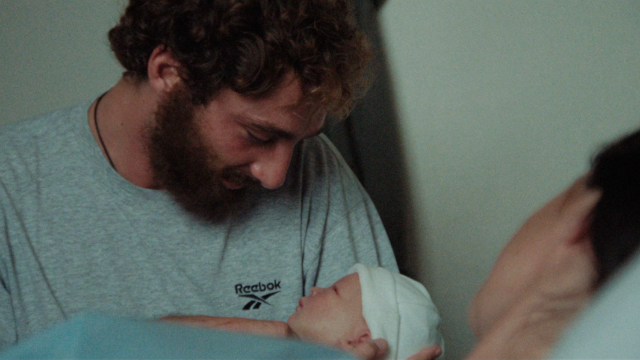
One scene sparked a lively post movie debate over slices of banana bread. I was adamant that the scene was a flashback, but now I’m not so sure! Here’s the scene:
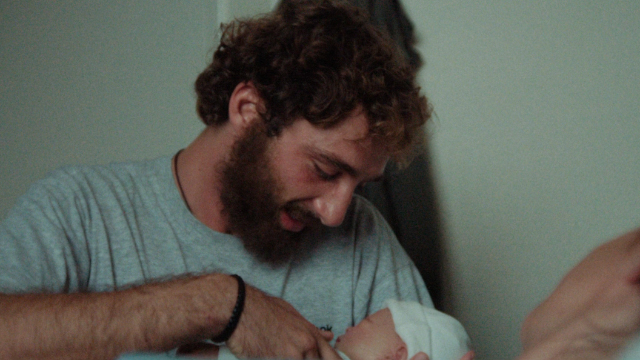
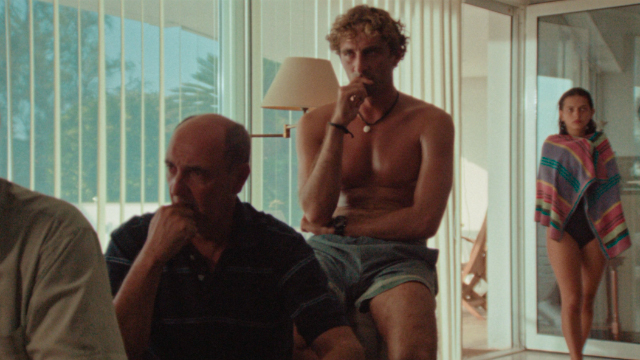
A newborn. Is it Lesia?. If so, it would have been about 1980. The slow pan from baby to mom clearly shows that the woman could be Lesia’s (now late in 1995) mother. There were at least two mentions of how much now 15 year old Lesia looks like her mother. The shot continues with baby taken into dad’s arms. Dad looks a lot like 1995 Santu here. His hair is darker though, and his beard is bushy like Lesia’s papa, Pierre-Paul, who had just been telling her how the time around her birth had been the happiest in his life. But then… papa’s ears are now huge, and new dad’s are not. Could they have grown that much in just 15 years?
Ah ha! A clue! A Reebok logo on a T-shirt. I got really excited to see this, but then found out that this particular version of the logo (wordmark on top) was not used until 2019. Shit.
Bracelet and necklace!
Santu wears a bracelet and a necklace!
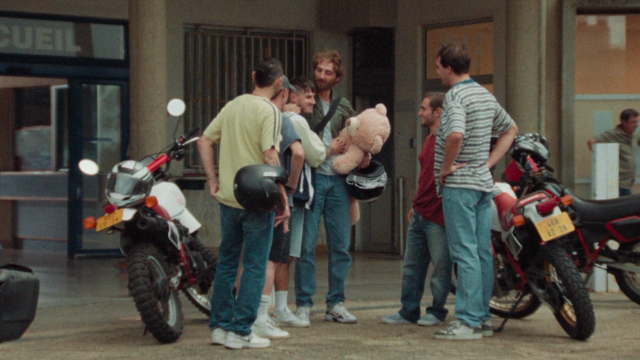
Cut to hospital exterior. Santu is given a huge teddy bear. Congratulations on your new baby? Here he is wearing a grey T-shirt (Reebok?), along with bracelet and necklace, AND a bushy beard!
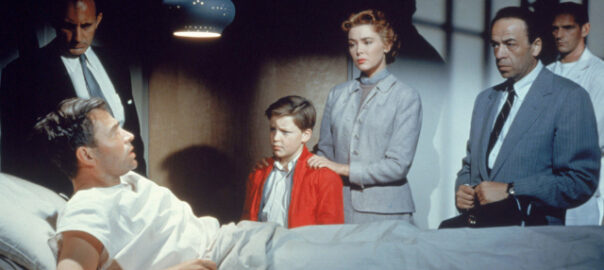
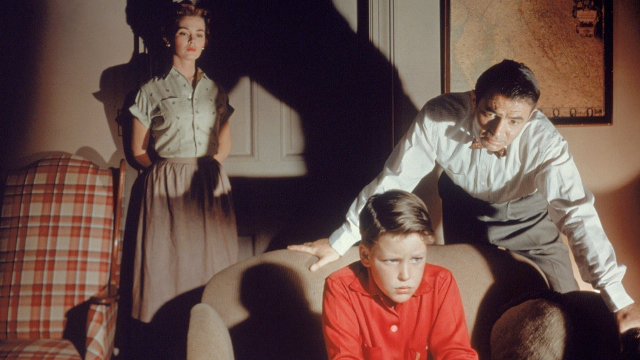
Nicholas Ray’s once overlooked and relatively unknown Bigger Than Life mesmerized us tonight. Sure… these days, one might have hoped for a darker ending than the one Fox apparently imposed on Ray, but this wasn’t really a deal-breaker for me. In some way it was maybe even a respite from an hour and a half of tension.
Thanks to Annalise for a great suggestion!
In retrospect, it’s remarkable that a major studio like Fox released a film as brutal and intense in its depiction of suburban despair as Nicholas Ray’s long-lost, little-seen 1956 masterpiece Bigger Than Life. At the height of the Eisenhower era, Ray’s film didn’t just paint an unrelentingly bleak portrait of a single unassailable American institution, it put a malevolent spin on nearly all of them. Family, childhood, fatherhood, the suburbs, capitalism, school, community, church, friendship, home, and marriage all take on a nightmarish quality when filtered through Ray’s unsparing lens. In Bigger Than Life, the average suburban home becomes a haunted house, and a devoted family man devolves into a cross between a deranged cult leader and Mr. Hyde.
In a performance that makes his later turn as a debonair pedophile in Lolita look like bobbysoxer-friendly froth by comparison, a frighteningly committed James Mason stars as a teacher who moonlights as a taxi dispatcher in a desperate attempt to provide for his family and subsidize his sad little stab at the American dream. When Mason develops a life-threatening illness, doctors prescribe a new wonder drug called cortisone. Freed from the shadow of death, Mason becomes a new man—healthy, vigorous, and unencumbered by the insecurities that plagued him before. But his newfound bravado quickly takes on a troubling edge as he develops megalomaniacal qualities and transforms his once-sedate home into a dictatorship, and then into something much more ominous.
Mason’s descent into madness and almost unfathomable cruelty is medically and pharmacologically induced, but Ray and his screenwriters (the script includes uncredited contributions from himself; Mason, who also produced; and Clifford Odets) subversively posit it as an outgrowth of the character’s relatable desire to escape the dull, small-minded emptiness of suburbia. In his bid to escape the ordinary and prolong his life, Mason becomes monstrous, but never inhuman. In its harrowing third act, Ray invests his terrifying tale of upward mobility gone horribly awry with the sinister shadows and ominous atmosphere of German Expressionist horror films. Bigger Than Life ultimately pulls back from the abyss, but the ending only qualifies as happy for those willing to ignore the abundant darkness at the edge of the frame.