Colours of Time. Thursday, April 23rd.

Original Title: La venue de l’avenir

Director: Cédric Klapisch / Year: 2025 / Color / French language / English subtitles / MPA rating: Not rated / Runtime: 124 min

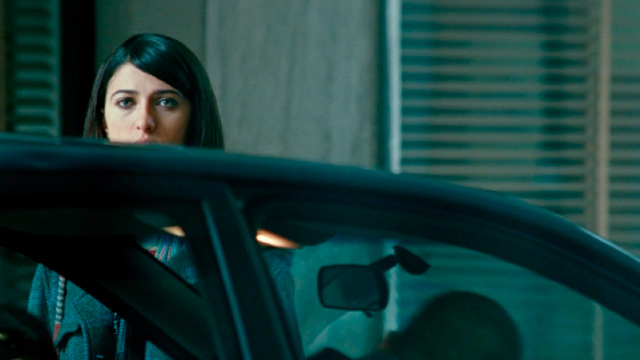
A country girl’s search for answers in the belle époque is ingeniously intercut with the adventures of her ragtag descendants in Cédric Klapisch’s film.

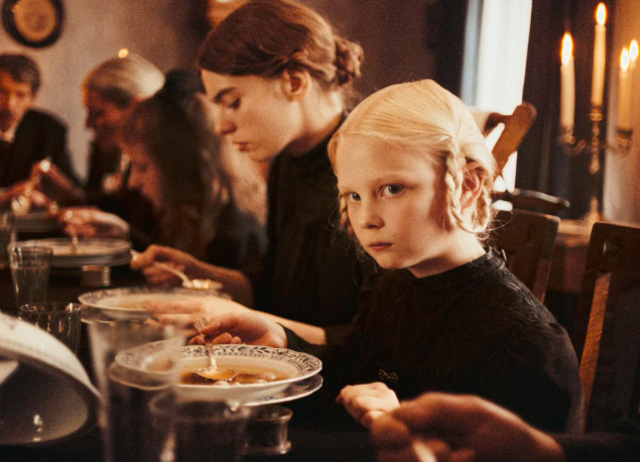
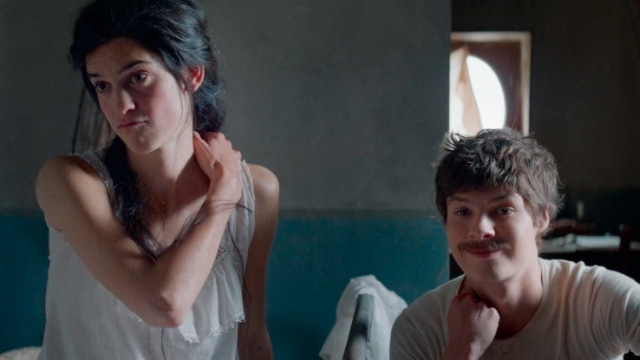
The original French title of Cédric Klapisch’s new film is La Venue de L’Avenir, or The Arrival of the Future; it is an entertaining sentimental fantasy, a chocolate-boxy ensemble picture in Klapisch’s distinctive style, inventing a romantic backstory to the career of Claude Monet and his contemporary, the pioneering photographer Félix Nadar.

These two whiskery bohemians are effectively involved in a Mamma Mia-type paternity puzzle concerning the drama’s female lead. Adèle (Suzanne Lindon) is a fictional young woman who during the belle époque makes a fateful journey to find her errant mother in Paris, leaving behind her sweetheart and the village where she was brought up, in the countryside near Monet’s home town of Le Havre. Her life and times are rediscovered by her descendants in the present day, and we intercut enjoyably between past and present.

For all that this film is about the revolutionary and disruptive business of art, it takes a pretty un-subversive view of art and artists, compatible with the museum gift shop. But I have to admit, it’s executed with brio and comic gusto – the “past” sections, anyway – and Lindon’s performance has charm.

In the present day, dozens of descendants of Adèle are contacted by the lawyers and PRs working for a property company that wants to build a vast new shopping mall, which would mean bulldozing Adèle’s derelict cottage, closed up since 1944. This garrulous ragtag bunch – including teacher Abdelkrim (Zinedine Soualem), fashion photographer Seb (Abraham Wapler), executive Céline (Julia Piaton) and beekeeper Guy (Vincent Macaigne) – need to give their collective consent. Intrigued by their inheritance, they crowbar their way into the dusty cottage to find a veritable Tutankhamun tomb of historical secrets: photos, letters and even what might be a painting.

Their detective work is interspersed, often ingeniously, with what Adèle in her own day discovers about her errant mother, Odette (Sara Giraudeau), and what she has been doing in Paris all these years to get the money she has been sending back to Adèle. It all comes to a wacky climax when our present-day claimants have an Ayahuasca psychoactive experience, which sends them back in time to encounter these historical culture icons in person at an exhibition, resulting in Victor Hugo making improper advances towards Céline. It’s the kind of French movie for which you’ll need a sweet tooth, but it’s tasty.

Review by Peter Bradshaw for The Guardian

Knife in the Water. Thursday, April 16th.

Original Title: Nóz w wodzie

Director: Roman Polanski / Year: 1962 / Black and White / Polish language / English subtitles /MPA rating: Not rated / Runtime: 94 min

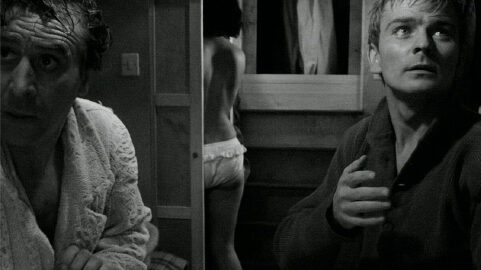
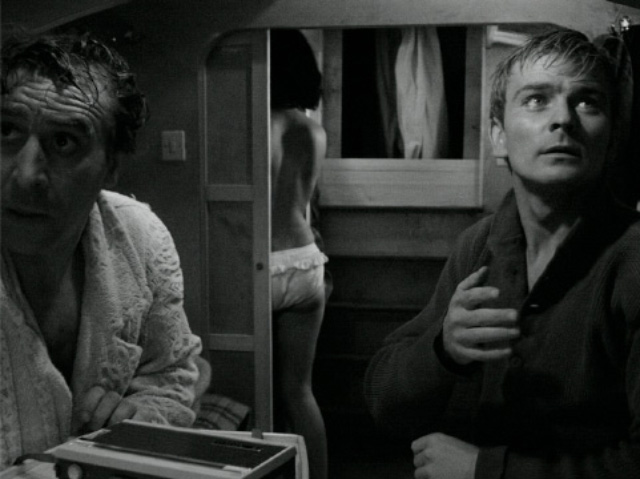
Having attracted international attention in the early ’60s with cruelly absurdist short films (Two Men and a Wardrobe, The Fat and the Lean) about isolated characters clashing as they struggle through empty landscapes, Polanski’s first feature elaborates on the theme but with added depth of characterisation. Indeed Knife in the Water is so well-written and acted you don’t notice until very late how artificial and stylised the whole set-up is.

The three characters obsessively flirt with each other and play one-upmanship games: pick-up-sticks, knife-throwing, tale-telling, that macho knife-between-the-fingers stunt seen in Aliens, yachtsmanship.

These days, it’s likely this story would be resolved by the revelation that one or more of the characters is a serial killer, but back in 1962 Polanski was sure enough of his effects to have the up-front action consist of apparently trivial conversations and contests with all the deep, disturbing character stuff going on below the waterline.

With then-modish and still-effective hand-held black and white photography of ominously calm countryside accompanied by an eerily burbling jazz score from Krysztof Komeda and excellent underplaying (Polanski, deemed not handsome enough to play the teenager himself, dubbed Malanowicz) from all three principles, this remains as fresh and rich as it did on its first release.

You can see the seeds of much of Polanski’s later work here, in the only feature he has made in Polish; though he has made deeper, more ambitious movies he has never directed another piece as perfect as this miniature.

Review by Kim Newman for Empire

My Summer of Love. Thursday, April 9th.

Director: Pawel Pawlikowski / Year: 2004 / Color / English language / MPA rating: R / Runtime: 86 min

Pawel Pawlikowski, the Polish-born documentarist now based in Britain, made an impression four years ago with his feature film, Last Resort. Its urgent subject was the way we treat immigrants and asylum seekers and it took a despairing view of their plight. His new film, My Summer of Love, seemingly turns away from pressing topical concerns, the title suggesting a romantic idyll which in some sense it is.

At the centre are two teenage girls, the middle-class, boarding school-educated Tamsin (Emily Blunt), and the working-class Mona (Nathalie Press), who meet one hot summer’s day in the fields outside a small Yorkshire town.

This opening is pastoral, bucolic. Mona, a pale, freckled redhead with a certain resemblance to the young Tilda Swinton, is lying in the faded grass, beside the red Honda motorbike she’s just bought. It cost £10 because it does not have an engine. She looks up at the sky which, in its flat whiteness, resembles the sur face of a lake. Suddenly above her rears a horse and Pawlikowski cuts between close-ups of her left eye and the enormous right eye of the horse. Confidently riding the horse is the beautiful, dark-haired Tamsin. From this casual encounter an intense friendship develops.

The setting is almost abstract, an unnamed town in a narrow valley through which a train passes on an embankment above the streets but never stops. Tamsin lives in a secluded, ivy-covered mansion with her father, a remote figure, rarely seen, who drives a maroon Jaguar. Her sister, she explains, has died of anorexia and her mother is an actress on tour. Mona, an orphan, lives in a cluttered room above a pub that has been closed down by her older brother, Phil (Paddy Considine). He’s a violent ex-criminal who has become a born-again Christian in jail and uses the ground floor as a meeting place for his devout circle.

Tamsin is a gifted cello player, self-consciously sophisticated, urging Mona to understand the world by reading Nietzsche and Freud and proclaims that Edith Piaf ‘had such a wonderfully tragic life’. She’s manipulative and a self-confessed fantasist. Mona, on the other hand, is a forthright girl with a cheeky sense of humour (she does a splendid impersonation of Linda Blair in The Exorcist), a strong local accent and no experience of life beyond this small community.

Her romantic yearnings are tempered by a knowledge that ahead of her is a predictable future leading up to menopause and death. Both girls seem alienated from their families and backgrounds and each provides things the other needs. Tamsin buys an engine for Mona’s Honda so they can go on jaunts together.

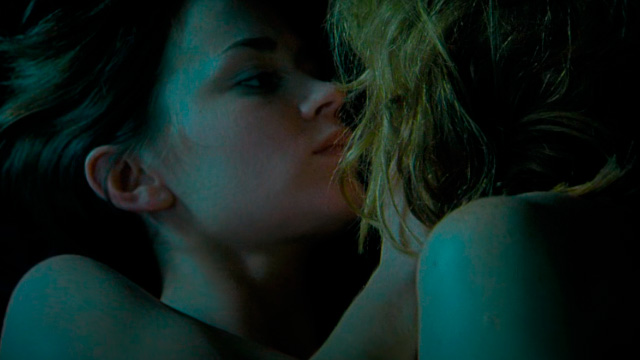
The relationship suggests two very different works about class, alienation, and destructive passion – Jean Genet’s The Maids and LP Hartley’s The Go-Between. Their friendship develops into love of both a spiritual and physical kind – first a kiss while swimming in a brook on the moors, then a more passionate embrace on a neglected grass tennis court and finally full consummation. This escalation is handled with tenderness and subtlety.

A tough humour informs the accompanying folie à deux by which the pair exact cruel comic revenge on Tamsin’s father for his adulterous liaison and on Mona’s brutal married lover for having deserted her. They then turn on Mona’s brother, Phil, to expose the supposed hypocrisy that has led him and his followers to erect a giant cross on a hill above the town, announcing their mission to save its benighted citizens.

My Summer of Love has a characteristically dangerous performance from Paddy Considine and remarkable performances from Nathalie Press and Emily Blunt, who bring a wonderful naturalness and conviction to Mona and Tamsin. They recall the striking debuts of Samantha Morton and Emily Watson in the 1990s. The picture is conventionally resolved, though not unsatisfactorily, and is oddly mysterious in its tone and thrust.

Is it a psychological drama involving social and sexual rites of passage? Or is the film a kind of allegory about the impossibility of sustaining the emotional intensity necessary to break away from the moral numbness of contemporary Britain?

The Chronology of Water. Stewart hits the ground swimming.

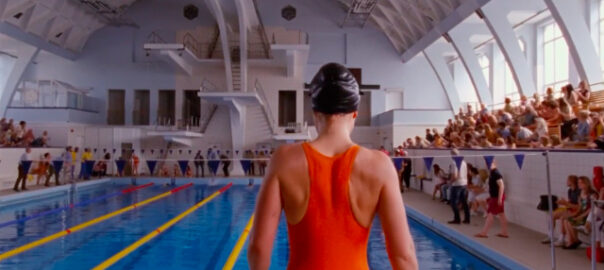
He nailed it with that one sentence, and yes, it was messy and shattered… at times difficult to watch (we had one walk-out tonight), but Kristen Stewart’s astounding debut was marked by powerful in-your-face cinematography and moored by Imogen Poots’ tremendous performance – her career-to-date best IMHO – and, for that matter, just a great cast all around. Jim Belushi as Ken Kesey FFS! I can’t help but wonder whether Stewart was “helping out” some actor friends. If so, they didn’t let her down!

Roger Dodger. Treasure found in the “crates”.

Tell me about your first time.

This week I once again eschewed the very modern, to look back fondly at what seems like a very different New York City. Has the city changed that much, or is it me? Maybe both. Whatever the case, Dylan Kidd’s Roger Dodger really hit the spot, with a very snappy script, and great performances all round (fascinating to watch the young Jesse Eisenberg, already shining).

For my part, I was happy to enable a bunch of people forget about the “now” and get lost in the “then” for 106 minutes.

Hardcore? Yes. Funny? Yes again!

Nothing to see here, mister.

To be honest, I can’t remember whether I ever saw Hardcore back in the day (damn! I was 27 when it came out!), but a recent recommendation prompted me to check it out. What a great movie. The story is gritty, grimy, sexy and exciting enough… there’s plenty of action, but beyond that, Schrader manages to inject a lot of laugh-out-loud moments. “My name is Dick Black.” proclaims the only African American at a casting for a porno movie. Hysterical.

Thanks for suggesting this A.P. You’re 2 for 2.

Attenberg. As in Sir David, kinda…

Athina Rachel Tsangari’s Attenberg is a quirky gem that falls easily into the category Greek New Weird – think Dogtooth, as a prime example. Yorgos Lanthimos had directed Dogtooth two years earlier and, perhaps not even suspecting the mark he would make as a auteur in years to come, he appears in a supporting role here. He plays the engineer who (very tenderly) guides Marina (Ariane Labed) in her journey of finally coming of age, sexually. There was definitely some chemistry between them, as three years later they married, and are together to this day.

Having watched Sir David Attenborough’s documentary on apes and monkeys together, Marina and her cancer-ridden father mimic monkey communication in some light-hearted moments in the film. Very touching.

And… this evening Igor returned with herring. Another great night at NewScreen!

The Secret Agent. A brightly colored movie with brightly colored VW Bugs everywhere. And then there’s Carnivale… people dropping off like flys.

I need some gasoline.

1977 Brazil. Not an easy time to stick to one’s principles and remain alive, but certainly fertile territory for brilliant movie-making. In The Secret Agent, director Kleber Mendonça Filho manages to break up the terror with doses of comedy, sometimes humanist, sometimes absurd, often laugh out loud.

Try as I might, I couldn’t get this almost 3 hour epic started at 8:30, as I had promised. Still, I was only about 15 minutes late. This was, however, 15 minutes too many, and we had a couple of dozers-off. I had to intervene with a quick bit of shushing. All good. Another great night at NewScreen.

If…. An extra dot in an ellipsis? Entirely forgivable in this case.

My face is a never-failing source of wonder to me.

Unexpectedly, we had another great turnout tonight. I say “unexpectedly” not because I was worried that folks wouldn’t love this movie, but because only 4 people responded to the invite. That’s the way it goes these days. I get it though, and I’m always happy when the doorbell just keeps ringing (and Tick just keeps barking, excitedly). Many thanks to Sheldon for acting as door-opener while I’m busy shaking up cocktails!

Lindsay Anderson’s quirky 1968 film, If…. marked Malcolm McDowell’s cinematic debut. Before this, he was known in Britain for his role as Crispin Ryder on the long-running ITV soap opera, Crossroads. He went on to garner acclaim in A Clockwork Orange, and O Lucky Man! and he has since appeared in well over 200 movies. As of today’s date, at age 82, McDowell is working on 7 projects, both filming and in pre-production. His latest film, Psycho Killer, will be released next week in theaters. Rock on, Malcolm! You are a never-failing source of wonder.