Category Archives: Trailers

Knife in the Water. Thursday, April 16th.

Original Title: Nóz w wodzie

Director: Roman Polanski / Year: 1962 / Black and White / Polish language / English subtitles /MPA rating: Not rated / Runtime: 94 min

Having attracted international attention in the early ’60s with cruelly absurdist short films (Two Men and a Wardrobe, The Fat and the Lean) about isolated characters clashing as they struggle through empty landscapes, Polanski’s first feature elaborates on the theme but with added depth of characterisation. Indeed Knife in the Water is so well-written and acted you don’t notice until very late how artificial and stylised the whole set-up is.

The three characters obsessively flirt with each other and play one-upmanship games: pick-up-sticks, knife-throwing, tale-telling, that macho knife-between-the-fingers stunt seen in Aliens, yachtsmanship.

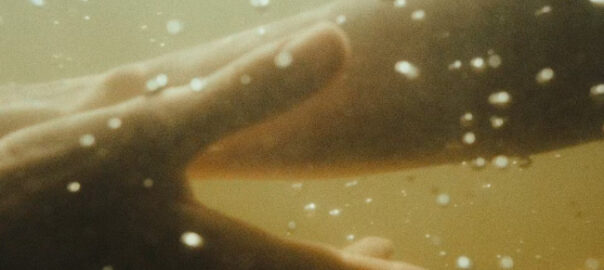
These days, it’s likely this story would be resolved by the revelation that one or more of the characters is a serial killer, but back in 1962 Polanski was sure enough of his effects to have the up-front action consist of apparently trivial conversations and contests with all the deep, disturbing character stuff going on below the waterline.

With then-modish and still-effective hand-held black and white photography of ominously calm countryside accompanied by an eerily burbling jazz score from Krysztof Komeda and excellent underplaying (Polanski, deemed not handsome enough to play the teenager himself, dubbed Malanowicz) from all three principles, this remains as fresh and rich as it did on its first release.

You can see the seeds of much of Polanski’s later work here, in the only feature he has made in Polish; though he has made deeper, more ambitious movies he has never directed another piece as perfect as this miniature.

Review by Kim Newman for Empire

My Summer of Love. Thursday, April 9th.

Director: Pawel Pawlikowski / Year: 2004 / Color / English language / MPA rating: R / Runtime: 86 min

Pawel Pawlikowski, the Polish-born documentarist now based in Britain, made an impression four years ago with his feature film, Last Resort. Its urgent subject was the way we treat immigrants and asylum seekers and it took a despairing view of their plight. His new film, My Summer of Love, seemingly turns away from pressing topical concerns, the title suggesting a romantic idyll which in some sense it is.

At the centre are two teenage girls, the middle-class, boarding school-educated Tamsin (Emily Blunt), and the working-class Mona (Nathalie Press), who meet one hot summer’s day in the fields outside a small Yorkshire town.

This opening is pastoral, bucolic. Mona, a pale, freckled redhead with a certain resemblance to the young Tilda Swinton, is lying in the faded grass, beside the red Honda motorbike she’s just bought. It cost £10 because it does not have an engine. She looks up at the sky which, in its flat whiteness, resembles the sur face of a lake. Suddenly above her rears a horse and Pawlikowski cuts between close-ups of her left eye and the enormous right eye of the horse. Confidently riding the horse is the beautiful, dark-haired Tamsin. From this casual encounter an intense friendship develops.

The setting is almost abstract, an unnamed town in a narrow valley through which a train passes on an embankment above the streets but never stops. Tamsin lives in a secluded, ivy-covered mansion with her father, a remote figure, rarely seen, who drives a maroon Jaguar. Her sister, she explains, has died of anorexia and her mother is an actress on tour. Mona, an orphan, lives in a cluttered room above a pub that has been closed down by her older brother, Phil (Paddy Considine). He’s a violent ex-criminal who has become a born-again Christian in jail and uses the ground floor as a meeting place for his devout circle.

Tamsin is a gifted cello player, self-consciously sophisticated, urging Mona to understand the world by reading Nietzsche and Freud and proclaims that Edith Piaf ‘had such a wonderfully tragic life’. She’s manipulative and a self-confessed fantasist. Mona, on the other hand, is a forthright girl with a cheeky sense of humour (she does a splendid impersonation of Linda Blair in The Exorcist), a strong local accent and no experience of life beyond this small community.

Her romantic yearnings are tempered by a knowledge that ahead of her is a predictable future leading up to menopause and death. Both girls seem alienated from their families and backgrounds and each provides things the other needs. Tamsin buys an engine for Mona’s Honda so they can go on jaunts together.

The relationship suggests two very different works about class, alienation, and destructive passion – Jean Genet’s The Maids and LP Hartley’s The Go-Between. Their friendship develops into love of both a spiritual and physical kind – first a kiss while swimming in a brook on the moors, then a more passionate embrace on a neglected grass tennis court and finally full consummation. This escalation is handled with tenderness and subtlety.

A tough humour informs the accompanying folie à deux by which the pair exact cruel comic revenge on Tamsin’s father for his adulterous liaison and on Mona’s brutal married lover for having deserted her. They then turn on Mona’s brother, Phil, to expose the supposed hypocrisy that has led him and his followers to erect a giant cross on a hill above the town, announcing their mission to save its benighted citizens.

My Summer of Love has a characteristically dangerous performance from Paddy Considine and remarkable performances from Nathalie Press and Emily Blunt, who bring a wonderful naturalness and conviction to Mona and Tamsin. They recall the striking debuts of Samantha Morton and Emily Watson in the 1990s. The picture is conventionally resolved, though not unsatisfactorily, and is oddly mysterious in its tone and thrust.

Is it a psychological drama involving social and sexual rites of passage? Or is the film a kind of allegory about the impossibility of sustaining the emotional intensity necessary to break away from the moral numbness of contemporary Britain?

Bigger Than Life. Father knows best?

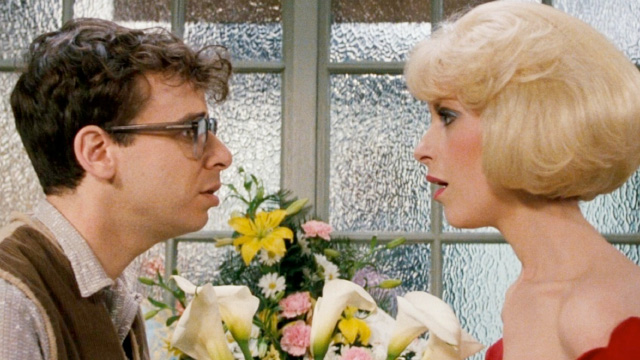
Hey Richie! The answer is 30!

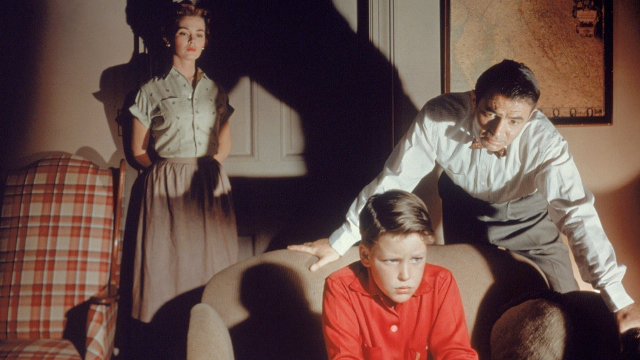
Nicholas Ray’s once overlooked and relatively unknown Bigger Than Life mesmerized us tonight. Sure… these days, one might have hoped for a darker ending than the one Fox apparently imposed on Ray, but this wasn’t really a deal-breaker for me. In some way it was maybe even a respite from an hour and a half of tension.

Thanks to Annalise for a great suggestion!

Ibrahima. One magical night.

Not only was Franck Tymezuk’s beautiful Ibrahima uplifting to watch, but tonight we had the added pleasure of being entertained by Ibrahima’s guitar and singing. It was kinda wonderful.

Ibrahima serenades. Photo by Zoe

Ibrahima follows the journey of a newly arrived Mauritanian immigrant in New York. Living in a park with other migrants, he survives by collecting cans to sell across the city while sharing his reflections on displacement, dignity, and hope. Through intimate moments of daily life, the film captures his efforts to preserve his beautiful soul and sense of community amid the harsh realities of migration.

The Five Devils. This girl really smells!

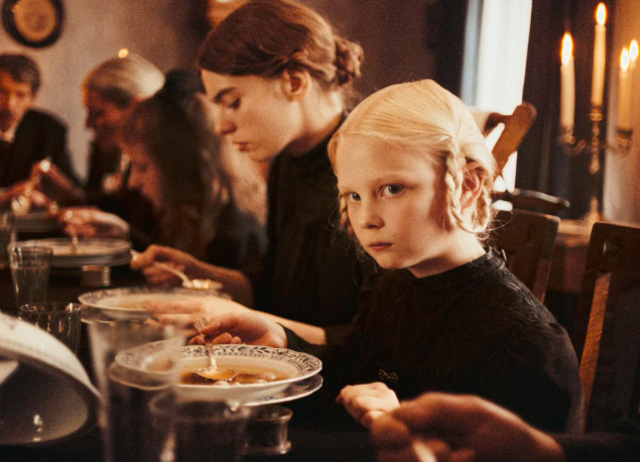
Tonight, I advised my audience that suspension of disbelief would be helpful. And you know what? They had no problem with that, and were thoroughly enraptured by this spooky story. Basically, a little girl has a better nose than a Jack Russell terrier, and a certain smells enable her to travel back in time to observe her mother’s life before she was conceived. But wait. there’s more! But… that’s enough spoiling for one blog post.

We had a lovely audience tonight, and Igor came through with perfect herring, which we enjoyed on my Borodinsky bread with a pat of butter, a thin slice of shallot, and good grinding of black pepper. Yum.

The Assessment. Thursday, May 15th

Director: Fleur Fortuné / Year: 2024 / Color / English Language / MPA rating: R / Runtime: 114 min

Where do babies come from? As everyone reading this hopefully knows by now, when a man and woman love each other very much… they invite a state-appointed assessor to enter their home for seven days to test their fitness for parenting in a series of endurance challenges that include forcing them to complete complex logic puzzles, trying to burn their house down with the hope that they can intervene in time to stop it, and observing (and sometimes participating in) their sex life. If they ace her tests based on her top secret criteria, they’re granted the privilege of filing the paperwork to begin the process of being considered as candidates to receive a child. If they displease her at any point throughout the week, they are instantly eliminated from contention with no option to appeal.

At least that’s how it works in “The Assessment.” Veteran music video director Fleur Fortuné’s feature debut takes place in an allegedly utopian future where aging and death have been all but eliminated. A revolutionary drug has given people the option to stop nature from ever taking its course on their bodies, but the lack of deaths has forced the state to start controlling the birth rate in order to ration resources. The result is that reproduction, the fundamental biological process that is quite literally everyone’s reason for existing, is now an elite hobby reserved for those who check every possible fitness box. Earth has subsequently been divided into the Old World, where people refuse to take the drug and live biologically natural lives that are filled with war, poverty, and disease; and the New World, where everyone lives in sterile, childless, prosperous immortality.

Mia (Elizabeth Olsen) and Aaryan (Himesh Patel) are the epitome of marital success in the New World. They live in a sleek modern house while enjoying prestigious careers — he’s a digital designer who uses holograms to make hyper-realistic renderings of earthly objects that can help fill the void left by scarce resources, and she’s a scientist who specializes in studying plant life. With a thriving marriage and established professional reputations, all that’s left to do is have a child.

They initiate the bureaucratic process and are assigned to Virginia (Alicia Vikander), an assessor who moves into their home to begin the evaluation. The Kafkaesque rules ensure that neither of them are allowed to ask any questions about her criteria, they must simply submit to her erratic behavior. Some days she acts like an inquisitive technocrat, while other days she assumes the behavior of a small child and tests the would-be parents’ limits with agonizing temper tantrums. As the seven days drag on, both Mia and Aaryan are left to wonder what the curious process is actually trying to discern about them.

“The Assessment” backs up its high concept with immersive world building thanks to eco-space-age production design and hazy cinematography from Magnus Jønck that conjures the image of a world so obsessed with preservation that it talked itself into throwing away everything that was worth hanging onto. That futuristic backdrop becomes a canvas on which to explore one of the oldest ideas in human history: the often frustrating limitations of central planning. Would-be authoritarians of both the benign and genocidal varieties have long salivated at the notion that if only a smart person was allowed to make decisions for an entire society from above, choosing who lives and who dies and who works and who profits, all of the pesky conflicts and inefficiencies of modern life would be whisked away. Of course, it never quite works out that way, and “The Assessment” persuasively makes the case that some stages of life are far too intimate for any government to regulate in the name of efficiency.

None of which is to say that the film is overly preachy, as Fortuné and screenwriters John Donnelly and Mr. and Mrs. Thomas have crafted a compelling genre thriller that manages to build a world that feels both genuinely new and depressingly realistic if human society goes too far down the wrong path. In a rapidly changing world where we constantly feel the need to reevaluate every pillar of our society, maybe we all ought to accept that making our own children and raising our own families is one part of life that we’ve definitively figured out.

Review by Christian Zilko for IndieWire

The Night of the Iguana. Thursday, May 8th

Black and White / English Language / MPA rating: Approved / Runtime: 125 min

Films of Tennessee Williams’ plays now often look very artificial and overwrought, but with this Huston came up with one of the best. Williams is treated with respect rather than reverence, and Huston injects his own sly humour. The film, which perambulates around Burton as the clergyman turned travel courier after a sex scandal, and the effects of his various crises of faith on the coachload of women teachers he is escorting (with assorted provocations from Lyon’s nymphet, Gardner’s blowsy hotel proprietor, Kerr’s artist) is all the more interesting in the light of Wise Blood, Huston’s later descent into the maelstrom of religious obsessions.

Time Out New York.

Holy Cow. Thursday, April 24th.

Original Title: Vingt dieux

Color / French Language / English Subtitles / MPA rating: Not rated / Runtime: 92 min

A celebration of young love and artisanal cheese-making, this micro-budget French drama became a £5 million box office smash on home soil, where it’s outperformed Oscar-winning heavyweights such as Anora, The Substance and The Brutalist. Only in France, you might shrug. Yet Holy Cow could charm anyone, even the most die-hard cheese-hater.

The setting is a sunlit, hardscrabble farming community in the Jura mountains. Here 18-year-old Totone (Clément Favreau) is a freckle-faced scamp whose carefree days of beer, girls, fights, fags and more beer hit a wall when his father dies, leaving him penniless and responsible for his seven-year-old sister (Luna Garret). Soon, Totone comes up with an unusual solution. Despite a total lack of expertise, he will enter a comté-making competition and win the €30,000 prize.

You can predict the entire movie already, right? The comedy cow moments, the cutesy sibling bonding, the nail-biting climax at the snooty cheese championships … However, Holy Cow delights by swerving most of those generic story beats while still serving up a feelgood ending that fully satisfies.

The secret ingredient here is authenticity. The director Louise Courvoisier was herself raised on a farm in the Jura region and has realised her assured, multi-award-winning debut with a largely non-professional cast. Favreau, her lead, is a former poultry farmer, whom she had to beg to perform a role that has since won him the Lumière award for most promising actor.

Immersed in rural, working-class culture, the action is vérité and honest without being bleak. Courvoisier shoots in a way that’s unfiltered — literally, given her use of natural light. You can practically feel that cool misty air, that hot sun on your skin.

Her vivid film is so alive you may believe you could even reach out and touch it — or eat it. Yet this isn’t glossy holiday porn or foodie porn any more than it is misery porn. Those mountain vistas are ravishing; they are also wonderfully wild.

A heartwarming coming-of-age story about a raw boy slowly ripening to manhood, this impressively mature debut is earthy, compassionate and never too cheesy.

Review by Larushka Ivan-Zadeh, for The Times of London

Mickey 17. Thursday, April 10th.

Color / English Language / MPA rating: R / Runtime: 137 min

You may not have noticed this unless you’ve watched his films closely, but Bong Joon Ho (“Barking Dogs Never Bite,” and some other stuff after that) has a few quibbles with capitalism. It’s true! I know it can be hard to focus on subtext when the former Captain America is lamenting the fact that “babies taste best,” but watch “Snowpiercer” for a second time and you might just be able to tease out a well-sheathed critique of the social order in its story about an economically segregated train where the people in the lower classes are forced to eat each other alive while their rich overlords in the front cars are free to enjoy the eternal rewards of the locomotive’s self-perpetuating engine.

Ditto “Okja,” which hides a damning rebuke of corporate greed behind a winsome fable about a girl and her pet superpig, “The Host,” whose monster feasts on the industrialized world’s collective disregard for its most vulnerable communities, and “Memories of Murder,” whose serial killer is empowered by the profound sense of helplessness that always trickles down to working people when things are rotten at the top. The Oscar-winning “Parasite” is really the only exception to the rule (just kidding).

You get the idea: Bong has a very particular set of interests, and subtlety isn’t one of them — even if nuance is one of his signature gifts. But that approach has always been more of a feature than a bug. In fact, I’d argue that the singular appeal of Bong’s films is rooted in the seemingly infinite spectrum of shiv-like slapstick they’re able to mine from the obviousness of the same basic subject; I’d argue that his films use the screaming moral iniquities of capitalism as a kind of centrifugal force that allows them to spin in several directions at once — and slush any number of different tones into a madcap genre all their own — without ever flying off the handle. And most of all I’d argue that “Mickey 17,” the best and most cohesive of Bong’s English-language films, offers such exciting proof of Bong’s genius precisely because it feels like such a clear amalgamation of his previous two, both of which are even goofier and more fumbling than his Korean-made work.

That trend continues and then some in his biggest swing to date, a wry, delightful, and resoundingly sweet mega-budget space adventure that doesn’t seem to be aware that it was made by a major American studio. Indeed, “Mickey 17” is so similar to “Snowpiercer” and “Okja” in both tone and theme alike that Warner Bros. can’t possibly try to act like they didn’t know what they were paying for.

Additively adapted from Edward Ashton’s novel “Mickey 7,” Bong’s latest film plays like a mega-mix of the director’s most familiar tropes. Like “Snowpiercer,” it’s set in a bleak-as-hell future where the Earth has become an unlivable ruin, and some portion of the survivors have squirreled themselves away inside of a massive vehicle that appears as if it might fall apart at any minute. In this case, that vehicle is a government spaceship rather than a privately owned train, it contains a small fraction of the world’s population rather than the whole thing, and it’s traveling to investigate the ice planet Niflheim — a potential site for human relocation — rather than just going around in circles, but the socioeconomic conditions aboard the vessel are all too familiar. If anything, they’re actually even more stratified than they were in Ed Harris’ wildly uneven design.

At the top of the ladder is a failed politician named Kenneth Marshall (Mark Ruffalo, his natural seriousness proving fertile ground for satire), who sees the expedition as a chance to create his own little fiefdom in the stars, and dreams of colonizing a “pure white planet full of super people.” At the bottom is the poor sap once known as Mickey Barnes (Robert Pattinson), a servile and self-negating orphan who follows his childhood bully Timo (Steven Yeun) around like a lost puppy, and didn’t think twice when his BFF suggested they take out a loan from the scariest gangster on Earth in order to start their own business selling macarons — they’re the new hamburgers!

Not so much, it turns out. Desperate for a way off-world, our boys hitched a ride on Kenneth’s ship. Timo took a job working the furnace, but Mickey thinks so little of himself that he signed up to be the ship’s token “Expendable,” a human guinea pig whose memories and biodata are saved on a hard drive so that his body can be endlessly reprinted every time he bites the dust. Need someone to go on a dangerous spacewalk to fix a busted part? Send a Mickey. Need someone to see if the Niflheim air continues an Ebola-like virus? Send a Mickey. At the risk of overstating the pleasure that Bong takes in killing his lead actor over and over again, it’s as if the director watched the last act of “The Substance” and thought to himself: “What if a movie started with its star barfing up all the blood in their body?”

And yet, much as that mordantly amusing scenario might lend itself to the stuff of high-key satire, the fact remains that Bong has never found any joy in the suffering of his strivers. Even here, in what would seem like his silliest movie if not for the cock-eyed sincerity of its construction, Bong’s natural inclination is to emphasize the downbeats; to frame Mickey’s dehumanizing misery in the context of his absent self-worth rather than as the result of a practical circumstance.

It’s a fine distinction, but one that makes all the difference to a movie in which human printing is simultaneously both a path to god-like immortality and also a punishment reserved for the most worthless members of society. You might think that Mickey’s invaluable role in the expedition’s success would establish him as a rockstar aboard Kenneth’s spaceship, but the reality is that having such a specific function — let alone one so dependent on his ultimate disposability — inspires the rest of the ship to think as little of Mickey as he thinks of himself. “Almost every single one of you will be remembered throughout history,” Kenneth blithely declares to his crew, and it’s clear who he’s leaving out of that legacy.

It’s one of the strange quirks of capitalism that people with clearly defined jobs are often valued so much less than those whose greatest task is to wield the illusion of their own importance, and yet making something into a job is enough to permit all manner of violence. Mickey’s job is to die, and because it’s his job, nobody thinks twice about what it means to let him do it every day. Seldom has Bong more succinctly or amusingly illustrated the dehumanizing horrors of that system than he does in the scenes where a new Mickey gets spat out of the DNA printer. The first time it happens, several crew members gather around to cradle and console his naked body. Cut to: a few printings later, when Mickey 10 or 11 is left to flop onto the floor while the only technician in the room is busy playing games on his tablet.

Then again, perhaps Mickey is right to have such little regard for himself. Maybe he really is just a piece of “bad meat.” The aliens he encounters on Niflheim in the movie’s opening scene would seem to confirm that suspicion, as the brilliant “Creepers” — as Kenneth dubs the indigenous species of freaky giant isopods who look like they were thawed out of Nausicaä’s worst nightmares — refuse to eat him even after Mickey falls into one of their nests.

The people aboard the spaceship certainly assumed they would, which is why they don’t even bother to retrieve Mickey 17’s body before they print out the next copy. Big mistake. For one thing, the powers that be don’t take kindly to the idea of multiples. For another, something about seeing another version of himself triggers Mickey’s long-dormant survival instinct; if one of the two Mickeys doesn’t sacrifice himself for the greater good, both of them are going to be put out of commission on a permanent basis.

If the marvelously detailed creatures — or Kenneth’s plans to exterminate them — don’t inspire fond memories of “Okja,” Bong’s renewed fascination with twinning certainly will. Working from his own script, the director thrills in how readily Mickeys 17 and 18 identify each other as an other, and there’s a wonderfully matter-of-fact quality to the sci-fi mishegoss that puts the two Pattinson’s into direct conflict.

Always willing to subvert his Tumblr-core past by making the weirdest choices he possibly can, Pattinson gives two of the best performances of his life here. The meek and constricted Mickey 17 is immediately endearing even though he talks like someone has their hands gripped around his throat, while the comparatively ruthless Mickey 18 feels like a direct continuation of Pattinson’s emo Bruce Wayne, down to the glowering patch of hair that falls over his forehead. The movie wouldn’t work if each of them didn’t feel like their own distinct people, but there’s never any risk of that, even if Mickey 18’s character arc skips over a few key stops in Bong’s rush to set the table for this story’s unexpectedly emotional grand finale.

The climax is the only large-scale sequence in a film whose unerring intimacy otherwise belies its interstellar mass, and the omissions from Mickey 18’s inner journey are all the more striking in the context of Bong’s emphasis on minute character detail over Hollywood-funded spectacle. Despite the size of its budget — whatever the actual number — and the six years we spent waiting to see it, “Mickey 17” is really just a lovable little story about a bunch of silly losers who are given enough distance from the rest of our species to take new stock of their own humanity.

It’s only natural that the film should thrive on the strength of its characters. Naomi Ackie is wonderful as Mickey 17’s girlfriend Nasha, a hot-blooded soldier who recognizes Mickey’s bravery for what it is — and starts to realize that she’s lucked into the world’s strangest “Challengers” situation. “This Is England” actor Thomas Turgoose brings layers upon layers of lived-in texture to the spaceship’s crew just by virtue of showing up, his “another day in the mines”-like energy the perfect complement to the dinginess of Fiona Crombie’s production design, which feels sort of like “Alien³” with a beating heart.

Most pivotally of all, Ruffalo threads the needle between unfeeling realness and cartoonish evil as a wannabe despot who’s fumblingly out of his depth, and wouldn’t know how to finish a sentence if not for the help of his sauce-obsessed wife (Toni Collette as Ylfa, who only seems to be under-cooked because of how patiently Bong waits for the right moment to serve her up on a silver platter). In a movie that spends most of its time confined to the disorienting guts of a derelict spaceship, tracking Kenneth’s de-evolution from Kennedy wannabe to a used car salesman version of Colonel Kurtz is often the only moral compass we have to find our way towards a better tomorrow.

For all the novelty of its characters and the uniqueness of their circumstances, “Mickey 17” is such an obvious composite of “Okja” and “Snowpiercer” that it occasionally threatens to feel as if Bong is repeating himself. But this film is such a vital addition to his body of work — as different from those previous efforts as the various Mickeys are from each other, despite their outward similarities — because it invites Bong to reframe socioeconomic inequality as an existential crisis with material consequences rather than as a material crisis with existential consequences.

In “Mickey 17,” the inability to feel another’s pain is positioned as the natural condition of a for-profit system, and human printing the final step towards eliminating a worker’s self-worth. “Have a nice death, see ya tomorrow.” This isn’t just another great Bong Joon Ho movie about how much he hates capitalism (though it definitely is that too), it’s the first Bong Joon Ho movie about how much he loves people.

He loves that they’re so foolish and eccentric; he loves that they’ll never make for perfect little drones that just do as they’re told. And he finds it so funny and sad and perversely fucked up that people keep inventing new ways to treat each other as if they aren’t people at all, as if humanity were hardwired towards its own erasure. Even here, in a story whose hero is technically immortal, everyone is obsessed with asking him what dying is like, but the truth is that they already know. By the end of this warm, poignant, and indivisibly human film, those same crew members might find themselves more curious to know what it’s like to be alive. At the very least, this is the rare Hollywood movie that feels like it’s capable of showing them, even if it has to kill its hero 17 times in order to figure out how.

Review by David Ehrlich, for IndieWire