Category Archives: Movies

Sirât. Thursday, December 4th

Director: Oliver Laxe / Year: 2025 / Color / Spanish, French, English and Arabic languages / English subtitles / MPA rating: Not rated / Runtime: 115 min

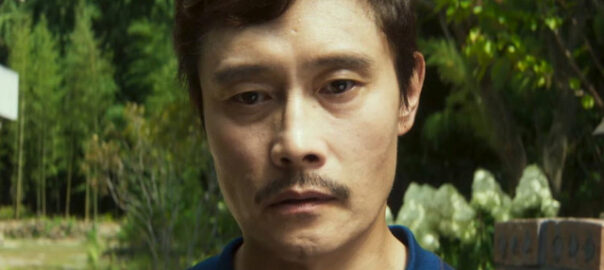
Filmmaker Oliver Laxe brings a kind of humbling brilliance to “Sirât,” his inaugural Cannes competition entry, after catching attention in sidebars for his previous films. It’s the kind of film that Cannes attendees from far and wide come to the festival for: sui generis and evading any classification, emanating from a wholly personal vision of cinema while not resisting galvanizing, and sometimes crowd-pleasing, pleasures.

Born in France to Galician parents, and shooting the majority of his work to date in Morocco, Laxe’s work operates in the interstices of borders and cultures, but wholly bypasses appropriation. It’s always visually transportive and grimly sublime, focusing on simple plots and conflicts that provide ample space for philosophical and existential contemplation. And “Sirât” is undoubtedly his most fully realized work in his regard, notable too for folding in the visceral pleasures of contemporary genre and even blockbuster cinema.

The world Laxe creates is finely rendered in both the fore- and background, revealing much greater scope than its initial set-up lets on. Luis (Sergi López, in another powerful performance) is another variety of a recurrent character in cinema and television now: the stricken father, forced to bring his emotions further to the surface than he’s typically comfortable with, and responding in disbelief to his offspring’s opposing values.

His teenage daughter Mar left five months ago for the Moroccan Sahara’s illegal rave parties — and never returned. With no online communication, and little sense of her ultimate whereabouts or intentions, Luis and his young son Esteban (Brúno Nuñez) travel there themselves. Laxe soon gets in his first of many effective, incongruous fissures, as these remnants of a domestic family amble around a score of pilled and tatted-up partiers, the sub-bass and steady 4/4 house music kick pushing tension into the red.

Pragmatically enough, after showing photos of Mar to a raver couple called Jade and Bigui (Jade Oukid and Richard Bellamy, playing version of themselves, like the majority of the cast beyond López), they mention she could be at a future party located south of where they are. They decide to join forces and navigate there together, and we allow Laxe another common modern auteur strategy: finally dropping the title card once the first act is well underway.

But what quashes that opening rave introduces one of the film’s most fascinating elements. A large convoy of military vehicles drive into the vicinity, and while there’s little threat of violence or confrontation between the two parties, something catches our attention when a soldier wants to take the “EU citizens” present into custody. As the drive begins, the radio mentions civilians massed at national borders, and statements from the NATO Secretary General.

It’s an alternate present or near-future, and the world is collapsing; suddenly, we understand the rationale of why Mar, and later her family, can disperse from where they permanently lived. Morocco emerges as an “interzone,” like William S. Burroughs famously characterized it in “Naked Lunch,” where European, African, Middle Eastern nationalities, as well as Islamic (the film’s title derives from the religion’s name for the bridge between hell and paradise), Christian and New Age (to cite the ravers) customs can commingle.

Upon his film’s very tactile and material basis, we can project any intelligent guess for backstory, yet it’s one of the best examples of the “anti-psychological” approach that experimental filmmakers such as Laxe (alongside Albert Serra and Yuri Ancarani) have been chasing over the past decade, with reference to their portrayal of bodies and landscapes.

With another band of travelers — Stef, Josh and Tonin, the latter of whom has lost part of his right arm — in tow, the screenplay by Laxe and Santiago Fillol seems to lay out a plausible Point B to its a Point A: the potential reuniting of the family at the final rave in a sentimental, but satisfying catharsis. The ensuing first hour almost seems like a problem-solving “adventure” film, with petrol to be bartered for and solutions found to traversing unsteady rocks and bodies of water.

Laxe, I’m sure, would be flattered by comparisons to “The Searchers” and the Mad Max series. Yet a shattering tragedy at around the film’s mid-point upsets that trajectory entirely, as their convoy of cars become stationary, and confrontations with mortality must be sought.

To expand on the very “material” nature of this film, it never concedes to any scenes of now-routine psychedelic disorientation; Laxe and his ace cinematographer Mauro Herce are confident their mere photography of the space will burrow us into the characters’ emotions and appreciation for the area’s splendor, and also promise transcendence.

Even if it shows civilization as we once knew it to be now perishing, the film pays tribute to contemporary leftist currents in imagining what a utopia after capitalism might look like. Collectivity could be our ultimate destiny: the community ritual of bodies attached to sublime music (and electronic dance music is more beautiful than many skeptics realize), the dispensability of the nuclear family in a world of greater co-operative labor and nurturing. Such hopes can seem strident or naive in the world where the majority of us live, but Laxe’s true achievement in this film is magicking a scenario where their realization isn’t just possible, but necessary.

Review by David Katz for IndieWire

Ibrahima. One magical night.

Not only was Franck Tymezuk’s beautiful Ibrahima uplifting to watch, but tonight we had the added pleasure of being entertained by Ibrahima’s guitar and singing. It was kinda wonderful.

Ibrahima serenades. Photo by Zoe

Ibrahima follows the journey of a newly arrived Mauritanian immigrant in New York. Living in a park with other migrants, he survives by collecting cans to sell across the city while sharing his reflections on displacement, dignity, and hope. Through intimate moments of daily life, the film captures his efforts to preserve his beautiful soul and sense of community amid the harsh realities of migration.

Accident. One woman. Three men. Loads of booze.

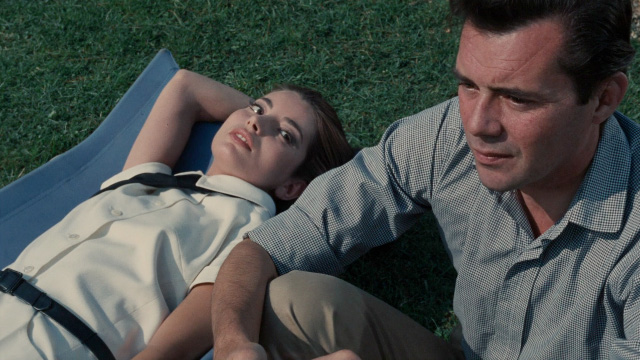
I was so pleased to rediscover this a few weeks ago. Accident is arguably the least known Pinter/Losey/Bogarde collaboration (the others are The Servant and The Go-Between) but the easiest to watch. As one reviewer advised, “Don’t try to match them drink for drink.” Of course we didn’t.

We did manage to demolish half a loaf of Borodinsky bread and a large jar of herring. Thanks Igor!

The Swimmer. NewScreen’s new season dives right in to deep (chlorinated) water.

Oh Neddy. Just one gin and tonic!

Wow. I was excited to see you all after the summer hiatus but, to be honest, I hadn’t expected the full house that turned up. Lovely to see you, and happy for some new faces.

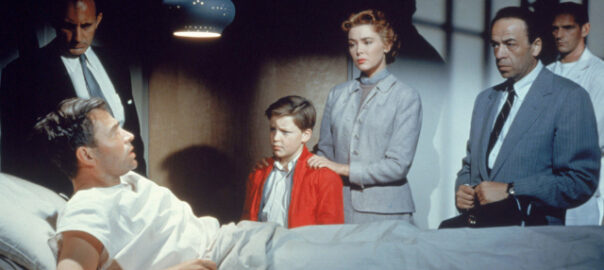
The Swimmer is ultimately quite a bleak tale but initially, it’s a fanciful romp . Ned turns up (clad only in a pair of Speedo trunks) unexpectedly at some well-to-do neighbors who are all suffering from “I drank too much last night” scenarios but are delighted to see him again (it’s been a while). He informs them that he has realized that he can “swim home” via a network of his neighbors’ pools. He accepts a drink, and continues on his way, diving into their pool, and heading on to the next. As he gets nearer to his goal of “swimming home”, his neighbors are increasingly less happy to see him and, at the Biswanger’s pool party, the proverbial shit hit the proverbial fan, after which it was all down(stream) from there for Ned. Tragically brilliant.

Igor turned up with herring, but alas, no Borodinsky was available. Next week!

Paradise: Hope. Oh Melanie.

After a flu-mandated week off, NewScreen bounced back with this final installment in Ulrich Seidl’s Hope trillogy, a tender story of a pedophilic romance between a middle age doctor, and a 13 year old girl at a summer “fat camp”. In the words of Mike D’Angelo (The A.V. Club), “[Paridise: Hope] is the most tender, nuanced, and deeply felt picture Seidl has ever made. What’s more, there’s no need to have seen the other two films, as Hope works beautifully all by its lonesome.”

A great NewScreen choice, if I do say so myself. Plus… herring and Borodinsky bread!

The Five Devils. This girl really smells!

Tonight, I advised my audience that suspension of disbelief would be helpful. And you know what? They had no problem with that, and were thoroughly enraptured by this spooky story. Basically, a little girl has a better nose than a Jack Russell terrier, and a certain smells enable her to travel back in time to observe her mother’s life before she was conceived. But wait. there’s more! But… that’s enough spoiling for one blog post.

We had a lovely audience tonight, and Igor came through with perfect herring, which we enjoyed on my Borodinsky bread with a pat of butter, a thin slice of shallot, and good grinding of black pepper. Yum.

The Assessment. Thursday, May 15th

Director: Fleur Fortuné / Year: 2024 / Color / English Language / MPA rating: R / Runtime: 114 min

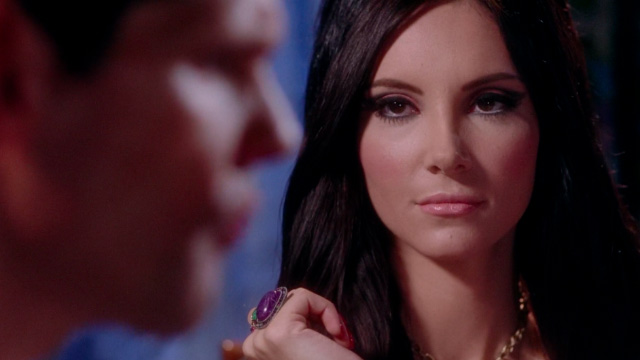
Where do babies come from? As everyone reading this hopefully knows by now, when a man and woman love each other very much… they invite a state-appointed assessor to enter their home for seven days to test their fitness for parenting in a series of endurance challenges that include forcing them to complete complex logic puzzles, trying to burn their house down with the hope that they can intervene in time to stop it, and observing (and sometimes participating in) their sex life. If they ace her tests based on her top secret criteria, they’re granted the privilege of filing the paperwork to begin the process of being considered as candidates to receive a child. If they displease her at any point throughout the week, they are instantly eliminated from contention with no option to appeal.

At least that’s how it works in “The Assessment.” Veteran music video director Fleur Fortuné’s feature debut takes place in an allegedly utopian future where aging and death have been all but eliminated. A revolutionary drug has given people the option to stop nature from ever taking its course on their bodies, but the lack of deaths has forced the state to start controlling the birth rate in order to ration resources. The result is that reproduction, the fundamental biological process that is quite literally everyone’s reason for existing, is now an elite hobby reserved for those who check every possible fitness box. Earth has subsequently been divided into the Old World, where people refuse to take the drug and live biologically natural lives that are filled with war, poverty, and disease; and the New World, where everyone lives in sterile, childless, prosperous immortality.

Mia (Elizabeth Olsen) and Aaryan (Himesh Patel) are the epitome of marital success in the New World. They live in a sleek modern house while enjoying prestigious careers — he’s a digital designer who uses holograms to make hyper-realistic renderings of earthly objects that can help fill the void left by scarce resources, and she’s a scientist who specializes in studying plant life. With a thriving marriage and established professional reputations, all that’s left to do is have a child.

They initiate the bureaucratic process and are assigned to Virginia (Alicia Vikander), an assessor who moves into their home to begin the evaluation. The Kafkaesque rules ensure that neither of them are allowed to ask any questions about her criteria, they must simply submit to her erratic behavior. Some days she acts like an inquisitive technocrat, while other days she assumes the behavior of a small child and tests the would-be parents’ limits with agonizing temper tantrums. As the seven days drag on, both Mia and Aaryan are left to wonder what the curious process is actually trying to discern about them.

“The Assessment” backs up its high concept with immersive world building thanks to eco-space-age production design and hazy cinematography from Magnus Jønck that conjures the image of a world so obsessed with preservation that it talked itself into throwing away everything that was worth hanging onto. That futuristic backdrop becomes a canvas on which to explore one of the oldest ideas in human history: the often frustrating limitations of central planning. Would-be authoritarians of both the benign and genocidal varieties have long salivated at the notion that if only a smart person was allowed to make decisions for an entire society from above, choosing who lives and who dies and who works and who profits, all of the pesky conflicts and inefficiencies of modern life would be whisked away. Of course, it never quite works out that way, and “The Assessment” persuasively makes the case that some stages of life are far too intimate for any government to regulate in the name of efficiency.

None of which is to say that the film is overly preachy, as Fortuné and screenwriters John Donnelly and Mr. and Mrs. Thomas have crafted a compelling genre thriller that manages to build a world that feels both genuinely new and depressingly realistic if human society goes too far down the wrong path. In a rapidly changing world where we constantly feel the need to reevaluate every pillar of our society, maybe we all ought to accept that making our own children and raising our own families is one part of life that we’ve definitively figured out.

Review by Christian Zilko for IndieWire